domenica 2 dicembre 2012

SEXUAL TOURISM


Wherever I look or I walk I see them! They’re everywhere! It’s incredible how many Italians there are here in Brazil! I’m talking not only about people with Italian origins but also tourists.
Rio is probably the most touristic city and it’s normal to see many Europeans here to have some fun having the possibility to disconnect their brain from normal life.
I’ve seen and tasted how much fun this place can offer: food, parties, the ocean and, of course, beautiful girls. All these opportunities are just not enough for someone and I’ve discovered it talking with a nice old man who was sat next to me in a bar.
He used to work in a hotel in Recife, the capital and largest city of the state of Pernambuco, with 1.5 million, and, over the years, he saw a lot of Italians, but he doesn’t have a good opinion on us (and after I’ve listened to him I couldn’t blame him).
Cities like Recife, Natal, Fortaleza and Joao Pessoa, in the north est of Brazil are famous for the sexual tourism and in these cities we, Italians, are very present. We are in the top with Germans and Portugueses in the list of sex tourists, especially with kids.


Natanael, the old man, described me how this horrible reality works; it’s easy for these men, they just have to choose a young girl, between 12 and 16 years old, walk with her, go shopping with her, offer a drink or a dinner and she’s going to stay with them all night.
Natanel now is retired but working in a hotel he saw this business changing. Now there are a lot of flies and some hotels don’t even ask the ID to the tourists, in this way they can maintain their anonymity. Clients can do whatever they want even if there is a number to call to denounce these crimes  but the mafia around the sex business is just too strong! 

domenica 25 novembre 2012

deforestation in Brasil


Today I decided it was time to spend some hours on a serious topic, so I collect some pieces of information about the deforestation of the rainforest in Brazil.

This is what Lourenço told me about it. Lourenço is doing his B-degree in biology at USP, the Universidade de São Paulo, which is thought to be one of the best universities in Brazil. He also told me some curiosities about university traditions, but I’ll tell abut them later on.

Deforestation in Brazil


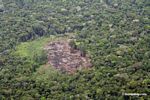
The Amazon is a vast and majestic rainforest, the largest one remaining on the Earth, teeming with an estimated quarter of all known land species. The jaguar, the pink river dolphin, the sloth, the world's largest flower, a monkey the size of a toothbrush and a spider the size of a baseball are just a few of the species that we know about - there are many more yet to be discovered.

It is also home to over 20 million people including hundreds of indigenous peoples, some of which have never been contacted by the ‘outside world’.

And finally, the Amazon stores 80 to 120 billion tons of carbon, helping to stabilize the planet's climate.

Brazil once had the highest deforestation rate in the world and as of 2005 till has the larger area of forest removed annually. Since 1970, over 600.000 square kilometers of rainforest have been destroyed. This was due to economical reasons: the government lack support to built highways and colonization programs, so the farmers made their own politic and went deep into the forest to get new lands for agriculture and animal breeding. In 2001, the Amazon was approximately 5.4 million square kilometers, which is only 87% of the Amazon’s original state.

In recent years, however, Brazilian deforestation rate is considerably declined. Despite the economic growth (about 40%), the forest has been protected by the enforcement of new environmental law, incentives in utilizing already deforested lands, a more severe monitoring from satellites and less profits coming from agriculture. The last, but not least, factor involved in the change  is the expansion of the protected natural areas and the indigenous reserved. Also the strong criticism that came from private sector companies and the emerging awareness of the values of ecosystem afforded by the Amazon play a role in the change of the deforestation trend.


domenica 18 novembre 2012

Discovering Rio


13.30
After all this samba I am starving! Dancing with pretty ladies is fun but I am exhausted. It is time to have some food. I am very surprised by the fact that there are so many sushi restaurants here in Rio. I didn't know it but in Brazil there are a lot of Japanese immigrants, and of course fresh seafood everyday. Obrigado, but no more sushi for me! I am going to try the churrascaria João told me about.

19.00
Oh my God I love this place. I must thank João for suggesting me this amazing restaurant: it is called Porcão and it is one of the best Rio's churrascarias, aka meat heaven! Vegans stay away. It is an all you can eat restaurant, and what is original is that when you seat you get two cards: the green one “sim gracias”, which means that you want more food, and the red one “não, obrigado” that you use when you are full! My green card has been literally my passport to paradise, and since I am not a guy who easily back down, passadores covered me whit meat. What can I say about it? It is delicious, cooked and served in huge sticks from which waiters (oops passadores) carve the meat directly in your plate.


Typical side dishes are rice (arroz branco), manioc and vegetables of all kind. I also tasted the famous fejoada, which is a stew of beans and pork. Delicious!
I had a huge meal, so I decided to have a walk. Here in Rio beaches are beautiful: sandy, wide and free so people can sunbath, surf, play volleyball, dance and eat without any worries. The most famous ones are of course Ipanema beach and Copacabana beach.
Ipanema is known all over the world thanks to the song “Garota de Ipanema”. You may not recall te title in Portuguese, but it is unlikely you have never heard it! Maybe the Portuguese name do not sound familiar to you but I bet you've heard it at least once!


Copacabana is a little way from Ipanema, with beautiful golden sand and a lot of accommodation for tourists.

Beach going is a lifestyle: fio dental bikinis, futevoley and, here again, lot of food! Coconut juice drunk directly from the coconut, empanadas, and typical coktails such as Caipirinha. Since it was Spritz time, I decided to have a Caipirinha, made of cachaça (sugar cane rum), sugar and lime.

Brazilian beaches are wonderful but I feel there is something much more beyond them in this country that is worthy to be discovered.
I want to find out a first-hand truth about the favelas, the sexual tourism, the Amazonian forest which is being deforesting and the biofuel policy.

I will write down everything, I promise!


mercoledì 14 novembre 2012


November 5th 2012, 10.30
I admit it .... I'm a terrible dancer but now that I have arrived in Brazil I can’t not improvise a few steps of samba! :)
The thing that surprised me is that the majority of the population lives in poverty and although they do not have enough food and money, they do not ever miss the smile and joy to live!

João, the owner of the guesthouse where I stay, I advice me a lot of places to visit and one of these is the Sambadrome!

Rio de Janeiro, Brazil, Central + South America: stadium-like Sambódromo in Rio de Janeiro, Brazil, where the Carnaval parade and contest take place


The Sambadrome was designed by Oscar Niemeyer in 1984 and in the last two years, it has been expanded to contain more people. It was created to became the temple of samba during Carnival of Rio, in fact every year, in February, the most important samba school parade in it!


I didn’t know samba is so famous in Brazil and in particular in Rio and Sant Paul! João say me that in Rio there is an organization of the most important samba school called “Liga Independente das Escolas de Samba do Rio de Janeiro” founded in the same year of Sambadrome, but the tradition to dancing samba is more older than the organization. Samba schools are divided in groups, from the most talented to less, they focus every efforts to preparation of Carnival, they choose the topic to build allegorical wagons then they choose the music that play the band and the choreography but only the most famous groups dancing in Sambadrome, the others parading in Avenida Rio Branco, that is a long street in the centre of Rio. Moreover every year, before the beginning of Carnival there is the incoronation of the Carnival’s queen, and this year the queen of 2013 is Evelyn Bastos, she is 19 and dancing for the Mangueira school, one of the most popular samba school!
http://imgs-srzd.s3.amazonaws.com/srzd/upload/e/v/evelyn_bastos_da_silva_(5).jpg


Brazil is beautiful!!:)

domenica 11 novembre 2012


Japan is great, but time has come to go on and continue my travel around the world. The next stop will be…. BRAZIL! I’m so excited to go there, in my dreams it is the land of samba, caipiroska, pluvial forest sandy beaches, hot and.. really handsome girls! ;)

I can’t look forward to the landing of the plane, so I’ll be able to jump out of it and find out whether my dreams are just illusion or if they are reality! News from Rio de Janeiro coming soon =)

Berto

venerdì 9 novembre 2012


November 3rd, 2012
02.00

I’m back. What a weird dinner! I was looking for a restaurant in my hotel street but unfortunately there weren’t any. I had to walk for a while but finally I found this little and cute place called Fusion.

Firstly I didn’t pay attention to the name of the restaurant but when I looked the menu everything was clear...a fusion of Italian and Japanese cuisine. I’ve never heard something like that!

It seems like Italian cuisine is having a huge success here in Japan and people are going crazy for that. Anyway...I decided to stay classic asking for some sushi: six nighiri and six uramaki.

I noticed immediately the absence of the napkin on my sit, I thought they may have forgotten it, but looking at the other tables it was clear that in Japan people don’t use napkins...

I can assure you the Japanese food we are use to eat in Italy is just a bad copy of the original one; eating my dish I had an explosion of flavours in my mouth.

There wasn’t even need to ask more wasabi, my passion, because it was already inside the rise and fish rolls. The waiter, a young and polite man, told me wasabi must be present inside sushi and he was surprised that outside Japan we eat it in a different way.

I finished the dinner really late and I was the last customer inside the restaurant so, drinking my sake, I decided to ask some questions to the waiter. His name is Akinobu and he’s a 21 years old student.

He confirmed that during the last 4-5 years Italian food is spreading in Japan and, on television, there are a lot of cuisine programmes with famous chefs cooking strange dishes in which Italian and Japanese cuisine are mixed.

It was even more interesting what he told me about his job and about the absence of unemployment in his country!

He started to work at 18, as the majority of Japanese guys. Here turning eighteen means becoming adults, having more responsibilities and being independent, even economically.

But, the most incredible thing Akinobu told me was that in Japan the occupation is near 100%!

The government prefers to create useless jobs instead of having unemployed people, you can find, for example, a person who’s job is to call the elevator and to invite you to enter.

Not having a job is a huge dishonour in Japan!

This is it. The first day is gone! Keep following my blog and I’d love to see a lot of comments!

Bye guys!


I suggest you to see this short video of “Wasabi” a French movie with Jean Renò...I just love this scene!!


martedì 6 novembre 2012

02/11/2012

08.00
Today, the destination is Kamakura!

Someone has never heard of this small coast town?...no?

Kamakura is an hour by train from Tokyo. It’s famous for its friendly atmosphere, for its zen temples and also for the National Heritage Museum in Kamakura.

Let’s go!:)


10.30
Here I am in Kamakura! Starts the tour…..

11.00
I decided to visit the sanctuary of Tsurugaoka Hachimangu! It’s only 15 minutes walk from the east exit of Kamakura’s station, the opening hours: 9:00-16:00, closed on Mondays and at the end of each month, admission is 100 yen.


Do you like it?...it’s Tsurugaoka Hachimangu shrine

It is the symbol of the old capital, it was founded by Minamoto Yoritoshi, ancestor of the shogun Minamoto Yoritomo, the founder of the Kamakura feudal government that ruled Japan from 1192 to 1333.

15.00
As a second destination for today I decided to visit the Great Buddha, or "Daibutsu" but it will better for me to hurry up before the temple of Kotoku-in closes, because the opening hours is 7:00 to 18:00 (17:30 from October to March).


17.00
After the travel by bus, I'm just down to Daibutsu-mae. The admission is 200 yen and the supplement is 20 yen to access the interior of the Great Buddha. Let’s go!


SPECTACULAR!!..... This is the statue of the Great Buddha!!

It is a giant statue 11.4 meters height and with a 122 tons weight.It represents the Buddha in the lotus position in the sky AND it is made of bronze plates mounted on a hollow structure, which allows enterING inside the monument!


.. I think that's enough for today, the day has been full of emotions!!


18.30
I am in the train that takes me back to Kamakura, in Tokyo and I am reading a book about the religions in Japan. I feel ignorant, after the day I spent in the temple, I realised that I don’t know anything about this topic!!


Which would you say to be the most common religion in Japan?

It’s the Shintoism that is based on cult of ancestors and nature, it’s organized in about 200 sects.

In the end of the 18 hundred, it became the official/state religion and the figure of the imperator became sacred, every cities were obliged to practice the cult of the Shinto temples. But thanks to the Constitution of 1947, everyone could practice the religion that they wanted and the imperator had renounced to be sacred.

The second religion is the Buddhism, which is also organized in sects. There is also a percentage of Christians, represented by Protestants, Catholics and Greek-orthodox, but it is professed by less than 4% of the population.


19.25
..now I leave you because I’m going to arrive at/in Tokyo!:)